
Prince George’s Parole Versus Probation
Parole and probation can both place a person under rules in the community, but they begin in different ways. Parole is a conditional release from confinement while the sentence continues. The Maryland Parole Commission decides whether an eligible incarcerated person is suitable for parole. The Division of Parole and Probation, or DPP, then administers community supervision. Probation is ordered by a court. It may follow a jail term, form part of a split sentence, or occur without a prison release at all. A probation docket entry therefore does not by itself prove a person was recently confined.
Mandatory supervision is another distinct status. It can begin when a state prisoner reaches a release point through applicable diminution credits, meaning credits that reduce time spent in confinement. The person remains in legal custody and subject to parole laws and conditions until the full term expires. Discharge is the later point when the supervision or sentence obligation ends. These distinctions matter whenever someone is described as “released.”
| Status | How it begins | What it proves |
|---|---|---|
| Parole | Commission approval plus completion of required pre-release conditions | Conditional community release once the custodian records the actual exit |
| Probation | Court order, with or without a prior term of confinement | Court supervision, not necessarily a recent jail release |
| Mandatory supervision | Release after eligible sentence credits | Physical release while the person remains in legal custody |
| Discharge | Expiration or lawful termination of the sentence or supervision | The supervised term has ended |
- Parole
- Conditional release from confinement before the sentence’s maximum expiration.
- Probation
- Court-ordered supervision that may replace or follow a period in custody.
- Absconder
- A person alleged to have stopped reporting or otherwise left supervision without authorization.
- Detainer
- A request or hold from another authority that can prevent or redirect release.
Check Prince George’s Supervision Status
Maryland provides no public DPP database that accepts a person’s name and returns parole, probation, mandatory-release, or absconder status. The absence of an online result proves nothing. Verification must start with the legal event, then move to the office that holds the related record. Use the person’s full legal name, date of birth when lawfully available, case number, and commitment number if known. A strong check joins the court order with a county or state release entry.
- Search Maryland Judiciary Case Search for the person’s Prince George’s County District and Circuit Court cases. Read the sentence, probation, commitment, modification, and later docket entries.
- Identify the supervision type. A probation order comes from the court. Parole or mandatory supervision usually follows a state or qualifying local sentence.
- Use the DPP office locator to find the Prince George’s office that may serve the case. Ask what public confirmation can be provided.
- For parole questions, consult the Maryland Parole Commission. An approval is not the same as an actual release.
- Confirm the physical exit separately. For a county event, contact PGCDOC Release & Records. For a state event, use the institution or a DPSCS record request.
A victim may contact a DPP office and, after identifying that status, ask for the assigned agent’s contact information under the agency’s victim-services process. That service does not imply that an agent’s identity or a full supervision file is open to every caller. Other requesters can ask what information is public or submit a focused Maryland Public Information Act request, subject to privacy, safety, and law-enforcement limits.
Prince George’s Probation Offices
The official Maryland DPP office listing identifies two field locations and a regional office serving Prince George’s County. Call before visiting because the research sources do not publish dependable public-counter hours. The Upper Marlboro field office also lists the Drinking Driver Monitor Program. Headquarters can help route a case when the correct field office is not clear.
Hyattsville Field Office
4990 Rhode Island Avenue, Suite 101
Hyattsville, MD 20781
301-699-3620
Upper Marlboro Field Office
14735 Main Street, Room 068B
Upper Marlboro, MD 20772
301-627-7200
Capital Regional Office
14735 Main Street, Room 068B
Upper Marlboro, MD 20772
301-780-6840
DPP Headquarters
Maryland Division of Parole and Probation
410-585-3500
State nonemergency contact: 877-227-8031
The directory screenshot comes from the official DPP locations page.
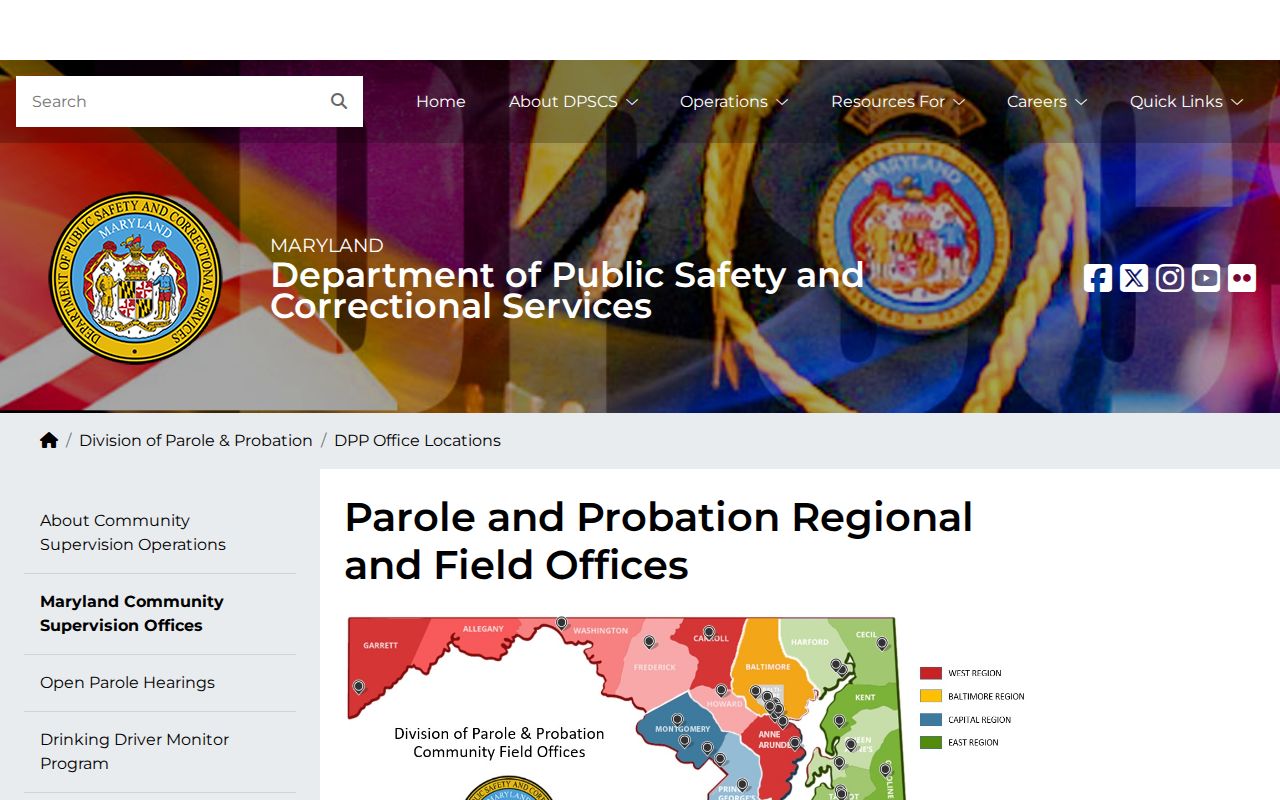
It corroborates the Hyattsville and Upper Marlboro routing details used for local supervision inquiries.
Note: Call 911 for an emergency; the office and statewide numbers above are for routine supervision routing and public-information questions.
Prince George’s Parole Hearing Records
The Maryland Parole Commission considers parole suitability for eligible state and local sentences of at least six months. A hearing may take place by video or at the institution. Public Commission business meetings occur every other Wednesday, but those meetings are not person-specific parole dockets. Likewise, meeting minutes are not a database of individual decisions. The DPSCS Public Services page links an Open Parole Hearings list, yet the direct master list found during research was labeled 2025 and was stale as of July 23, 2026. Confirm any schedule with the Commission at 410-585-3200 or 877-241-5428.
The Commission describes three central outcomes. “Refuse” denies parole without setting another hearing. “Rehear” sets a later time for reconsideration. “Approve” authorizes release after required conditions are met. Approval alone does not show that the person left the institution, since planning, another hold, or an administrative event may delay or change the exit.
The official Maryland Parole Commission page supplies its contact and meeting information.
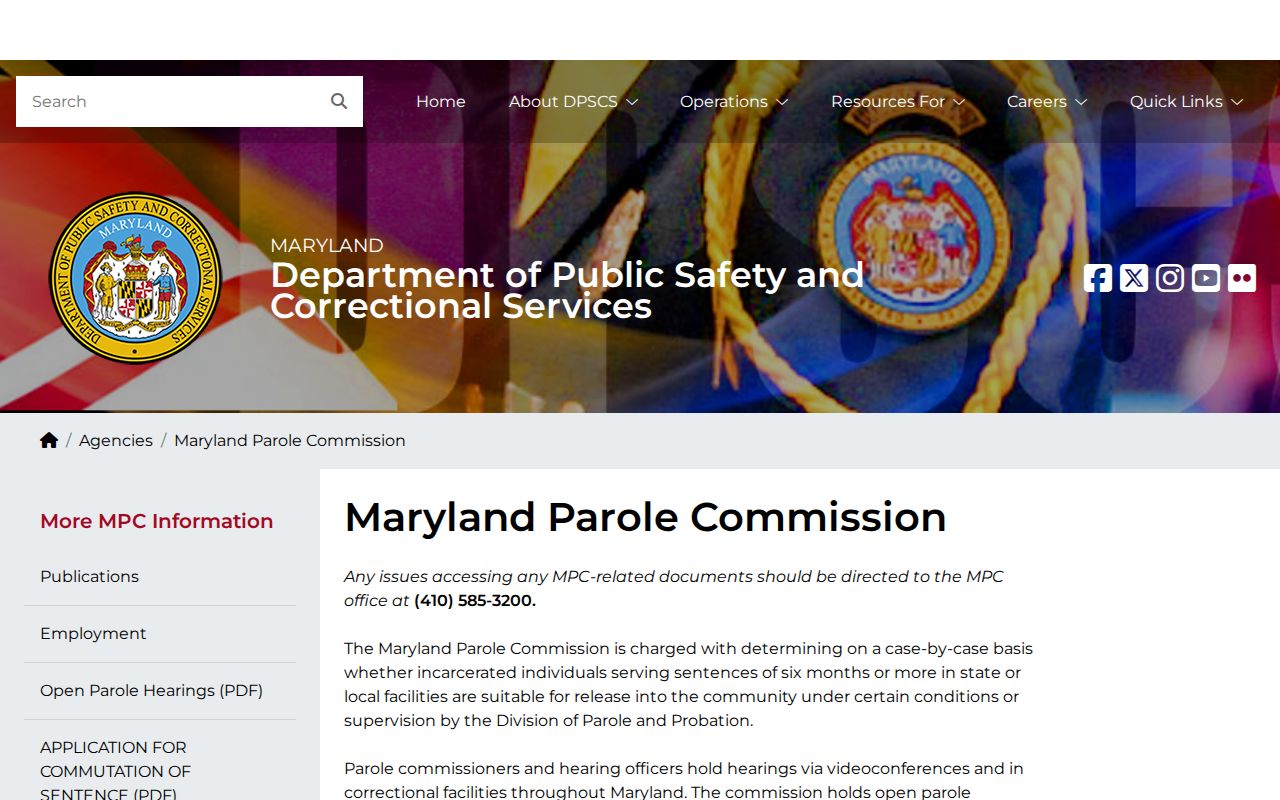
That source is useful for current contact details, while an actual release still needs confirmation from the confinement record.
Note: Confirm the current hearing list with the Maryland Parole Commission because the directly located master PDF was stale when researched.
Prince George’s Supervision Violations
Supervision conditions come from the court, Parole Commission, or release documents. They may require reporting, approved residence, program participation, or compliance with other case-specific terms. A violation allegation can lead to a warrant, arrest, hearing, return to secure custody, or another response. It does not automatically erase the earlier release event. The record should distinguish the original release, the alleged violation, and any later custody event.
DPP identifies a Parole and Probation Enforcement Program and Warrant Apprehension Unit. These are enforcement functions, not public name-search tools. A person described as an absconder is alleged to be out of contact or noncompliant while supervision continues. It is wrong to infer either discharge or current community status from the lack of a public list. The official DPP agency page explains the supervision and apprehension roles.
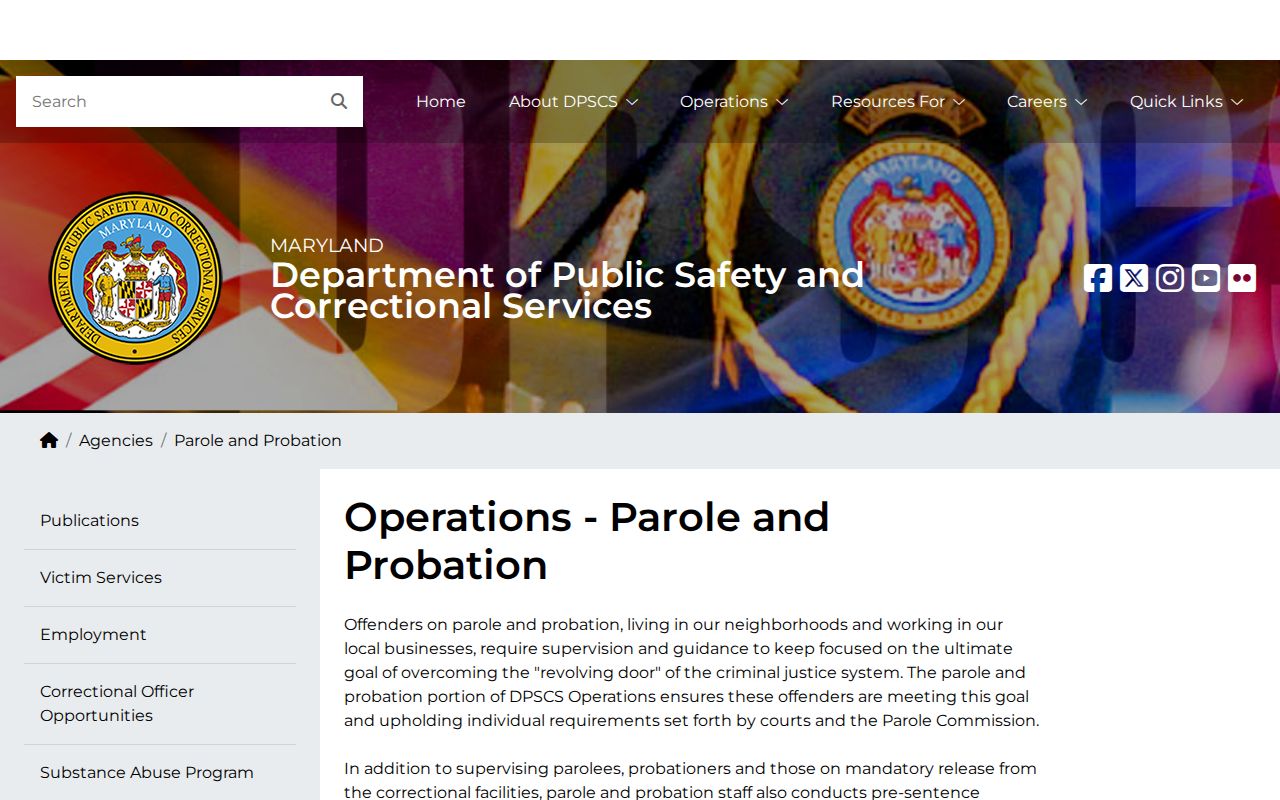
The page confirms agency functions but does not create a public supervision or warrant lookup by person.
Maryland VINE may provide registered notifications for some probation or parole events. It is a prospective alert tool, not a full supervision history. Its live wording and source coverage can vary, so pair an alert with the court and agency record.
Prince George’s Reentry Supervision
Prince George’s County adds a local layer through the PGCDOC Community Corrections Division. Its Community Release Center and Re-entry Services Unit support structured placement and discharge planning for county-sentenced people. The Center reopened in April 2024. The FY 2026 county budget described about 25 residents served and a five-person monthly average during that early phase.
Entry into the Community Release Center is not full discharge. A resident has community access but remains bound by residential and custodial rules. Successful completion can end that placement and return the person fully to the community. A violation or new court order can instead return the person to secure custody. For that reason, the record should say whether the event was transfer into structured community placement, completion of the placement, or discharge from supervision.
The PoKKet app mentioned in county budget material is a reentry resource-navigation product. It is not a parole search, probation lookup, jail roster, or release alert app. No public PGCDOC or Sheriff jail-search app was found.
Prince George’s Supervision Discharge
Supervision ends through expiration, lawful discharge, court action, or another case-specific decision. Physical release comes earlier in many cases. Maryland expungement waiting periods can also measure from completion of the full sentence, including parole, probation, or mandatory supervision. The date someone left confinement may therefore differ greatly from the date all sentence obligations ended.
To document the sequence, collect the court sentence and later orders, the PGCDOC or DPSCS release record, and the final supervision or discharge record when available. Maryland’s Public Information Act begins with access but permits redaction or withholding for privacy, investigatory, safety, and correctional reasons. A narrow request for an existing date or status is stronger than a request asking an agency to create a narrative. The broader Prince George’s County released inmate search explains how county, state, court, and notification sources fit together.
Note: A missing online record is not proof that parole or probation ended; obtain the applicable court or agency record before drawing that conclusion.